GUIDE 04 / EXPOSURE FIELDWORK
Night & Low-Light Photography
Control shutter speed, aperture, ISO, artificial light and focus when exposure becomes less forgiving.
 < /section>
Expose with intent
Low light is a balance between motion, depth of field and noise. Start with the subject’s movement. A static building permits a slower shutter; a moving person may require a faster one. Open the aperture when depth allows. Raise ISO only after deciding what must remain sharp. Review highlights from signs, lamps and reflective surfaces.
Artificial light
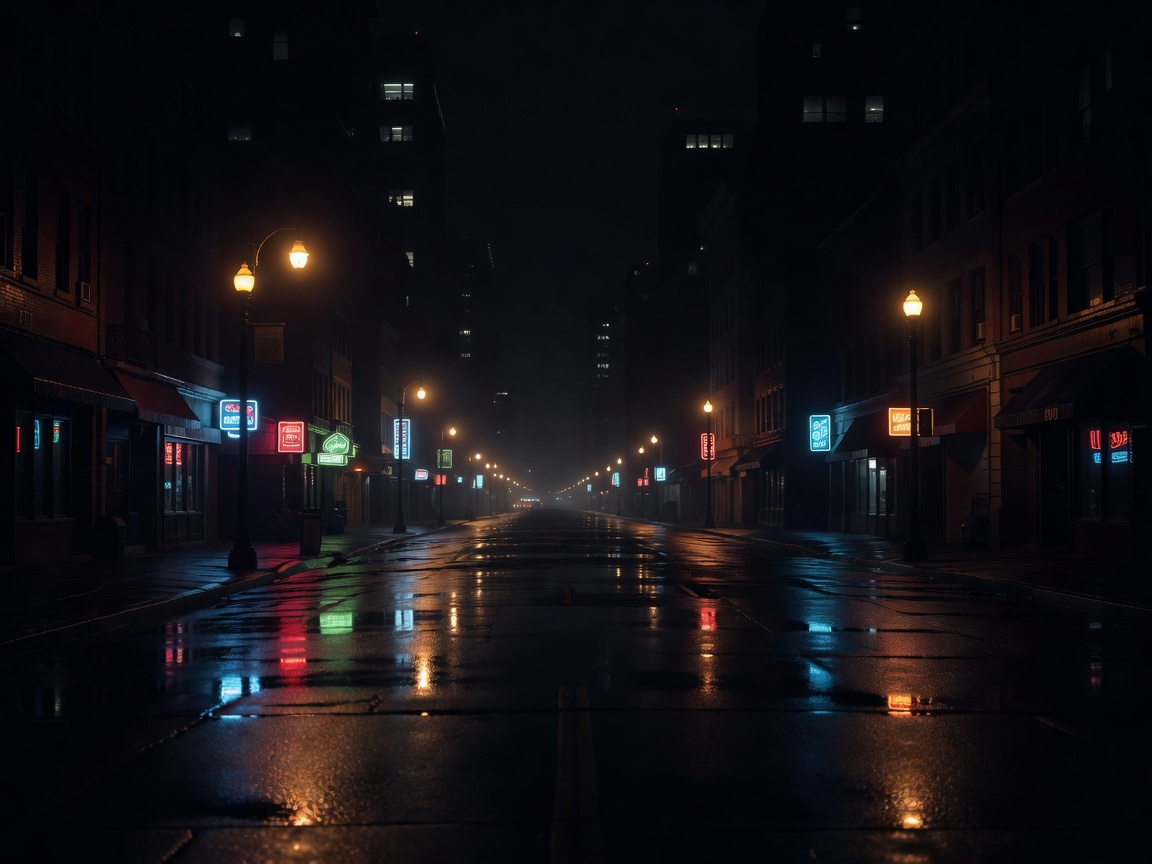
Street lamps, shop windows and vehicle lights create mixed colour temperatures. Treat them as compositional sources, not simply problems. Look for pools of light and wait for a subject to enter them. Exposure compensation can help in automatic modes when a dark frame causes the camera to overexpose bright signage.
Tripod and focus
A tripod helps with static scenes and long exposures, but it is not always practical on crowded streets. Disable unnecessary stabilisation when the camera is firmly mounted if the manual recommends it. Autofocus may hunt in darkness. Use a bright edge, magnified live view or manual focus, then confirm at the intended aperture.
Noise management
Noise is influenced by exposure, ISO, temperature and processing. Avoid underexposing heavily and lifting shadows without need. Capture a clean frame with the same composition when useful. Do not allow technical perfection to erase atmosphere; grain, blur and colour shifts can be part of the visual language.
Good fit for
Night work suits photographers who enjoy controlled experiments and slower review. It is less suitable for anyone without weather protection, spare power or a plan for returning safely after dark.
What to verify
Confirm the start and finish time, route lighting, transport, tripod expectations, weather plan and focus instruction. Follow local rules and avoid blocking entrances or disturbing residents. Never assume a dark location is safe or accessible.
Field checklist
- Set a minimum shutter speed for moving subjects.
- Check highlight detail around lamps and signs.
- Carry a small light, spare battery and weather cover.
- Review focus at full image size.
Pair this guide with city photography or the workshop planning guide.